

.::.
Integrated Weed Management of Cuscuta planiflora: Protecting Egyptian Clover Production
.::.
----------------
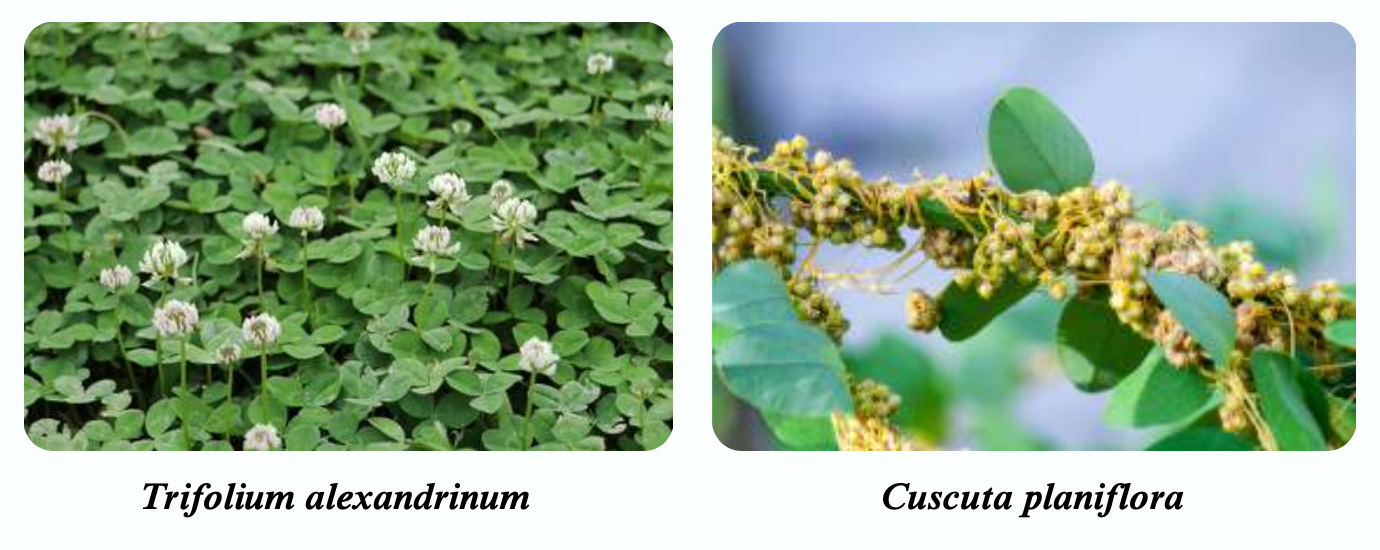
Egyptian clover (Trifolium alexandrinum L.), also known as berseem, represents one of the most important forage crops in Egypt and several temperate and subtropical regions. As a winter annual leguminous crop, it provides essential fresh fodder, silage, and hay for livestock while simultaneously enhancing soil fertility through biological nitrogen fixation. However, the productivity and quality of Egyptian clover face a significant threat from dodder (Cuscuta planiflora), a parasitic weed that can cause yield losses of up to 80%. This parasitic plant lacks photosynthetic capability and depends entirely on its host for survival, extracting nutrients and water through specialized organs called haustoria. The challenge of managing dodder requires an integrated approach combining cultural practices, resistant varieties, and innovative control methods.